


Precious Metals Trading has become increasingly popular among investors and traders looking to diversify their portfolios and take advantage of market opportunities. From gold and silver to platinum and palladium, these assets are widely traded due to their historical value and role as safe-haven investments during periods of economic uncertainty.
Whether you’re completely new to trading or exploring alternatives to stocks and cryptocurrencies, this guide explains how to trade precious metals, the best markets to consider, and the strategies beginners can use to get started confidently.
Precious Metals Trading is the process of buying and selling metals such as gold, silver, platinum, and palladium to profit from price fluctuations. Traders can access these markets through CFDs, futures contracts, ETFs, or physical metals, depending on their investment goals and risk tolerance.
What Is Precious Metals Trading?
Precious metals are rare metallic commodities that hold economic value due to their scarcity, industrial use, and investment demand. The most commonly traded metals include:
- Gold
- Silver
- Platinum
- Palladium
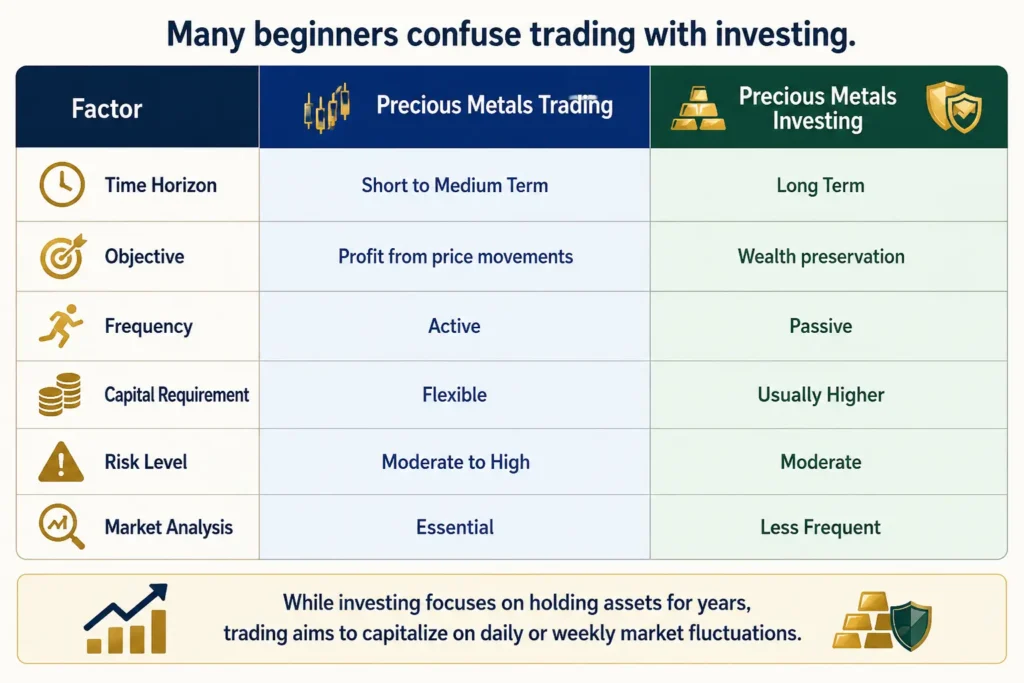
Unlike traditional investments, traders focus on short- and medium-term price movements rather than long-term ownership. This makes online precious metals trading attractive for those seeking frequent trading opportunities.
Market participants monitor factors such as inflation, interest rates, central bank policies, and global economic events because these often influence precious metal markets.
Precious Metals Trading vs Investing
What Are the Best Precious Metals to Trade?
Gold Trading
Gold remains the most liquid and widely traded precious metal. Many traders choose gold because of its strong reaction to inflation data, geopolitical events, and monetary policy decisions.
Silver Trading
Silver trading offers higher volatility than gold, creating more short-term trading opportunities. Industrial demand often influences silver market trends.
Platinum Trading
Platinum is commonly used in automotive manufacturing. Supply constraints can create significant price swings.
Palladium Trading
Palladium trading has gained popularity due to its use in vehicle emissions systems and limited global supply.
For most beginners, gold and silver are often considered the best precious metals to trade because of their liquidity and market accessibility.
How Does Precious Metals Trading Work?
Modern trading platforms allow traders to speculate on metal prices without owning physical bullion.
Popular methods include:
- CFDs (Contracts for Difference)
- Futures Contracts
- ETFs
- Physical Metals
- Mining Stocks
Most retail traders prefer CFDs because they provide flexibility and access to both rising and falling markets.
For additional market education, resources from the Investopedia learning center can help beginners understand trading terminology and market mechanics.
Precious Metals Trading for Beginners Step by Step
Step 1: Learn Market Fundamentals
Before risking capital, understand what drives gold price movements and silver market trends.
Important factors include:
- Inflation rates
- Interest rates
- Central bank policies
- Economic growth data
- Market sentiment
- Geopolitical events
Step 2: Choose a Regulated Broker
Select a broker that offers:
- Competitive spreads
- Strong regulation
- Educational resources
- Reliable trading platforms
You can also review guidance from the Commodity Futures Trading Commission (CFTC) regarding commodity market risks.
Step 3: Open a Demo Account
Practice trading in a risk-free environment before committing real funds.
Step 4: Create a Trading Plan
Your plan should define:
- Entry criteria
- Exit rules
- Risk management
- Profit targets
Step 5: Start Small
New traders should risk only a small percentage of their account on any single trade.
How to Trade Gold and Silver Online
The most common approach involves using CFDs through a regulated broker.
A simple process includes:
- Analyze the market.
- Identify support and resistance levels.
- Confirm the trend.
- Place a buy or sell trade.
- Set stop-loss and take-profit levels.
- Monitor market developments.
Many traders also rely on gold trading signals to identify potential trading opportunities and improve decision-making.
Best Strategy for Precious Metals Trading
There is no single strategy that works for everyone, but beginners often benefit from:
Trend Following
Trade in the direction of the prevailing market trend.
Breakout Trading
Enter trades when price breaks above resistance or below support.
News Trading
React to major economic announcements that impact inflation protection demand and safe-haven buying.
Technical Analysis
Use indicators such as:
- Moving Averages
- RSI
- MACD
- Fibonacci Retracement
These tools help traders evaluate market sentiment and identify potential entry points.
Is Precious Metals Trading Profitable?
Yes, precious metals trading can be profitable when supported by sound risk management and consistent analysis.
However, profitability depends on:
- Market knowledge
- Discipline
- Risk control
- Trading strategy
- Emotional management
Like all financial markets, losses are possible, and traders should never risk money they cannot afford to lose.
How Can Beginners Start Trading Precious Metals?
Beginners should focus on education before capital deployment.
A practical path includes:
- Learning market fundamentals
- Practicing on demo accounts
- Starting with gold and silver
- Following a structured trading plan
- Managing risk carefully
- Tracking trading performance
Consistent learning often matters more than finding quick profits.
Conclusion
Precious Metals Trading offers exciting opportunities for traders looking to benefit from market volatility while gaining exposure to valuable assets such as gold, silver, platinum, and palladium. By understanding market drivers, choosing the right trading platform, and applying proven risk management techniques, beginners can build a solid foundation for long-term trading success.
Success in these markets requires patience, education, and a commitment to continuous improvement. Start small, focus on the process over profits, and gradually develop your skills as market experience grows.
Ready to improve your trading decisions?
Explore our professional gold trading signals and market insights to identify potential opportunities, strengthen your trading strategy, and stay informed about key developments affecting precious metal markets.
Disclaimer
The information provided in this article is for educational and informational purposes only and should not be considered financial, investment, or trading advice. Trading precious metals involves significant risk and may not be suitable for all investors. Past performance does not guarantee future results. Always conduct your own research and consult a qualified financial advisor before making any investment decisions.
FAQ
1. What is precious metals trading?
It is the buying and selling of metals such as gold, silver, platinum, and palladium to profit from price changes.
2. How does precious metals trading work?
Traders use instruments such as CFDs, futures, ETFs, or physical metals to gain exposure to price movements.
3. What are the best precious metals to trade?
Gold and silver are generally considered the most beginner-friendly due to their liquidity and accessibility.
4. How can beginners start trading precious metals?
Start by learning market fundamentals, practicing on a demo account, selecting a regulated broker, and following a risk-managed trading plan.
5. Is precious metals trading profitable?
It can be profitable, but success depends on market knowledge, strategy, discipline, and proper risk management.