



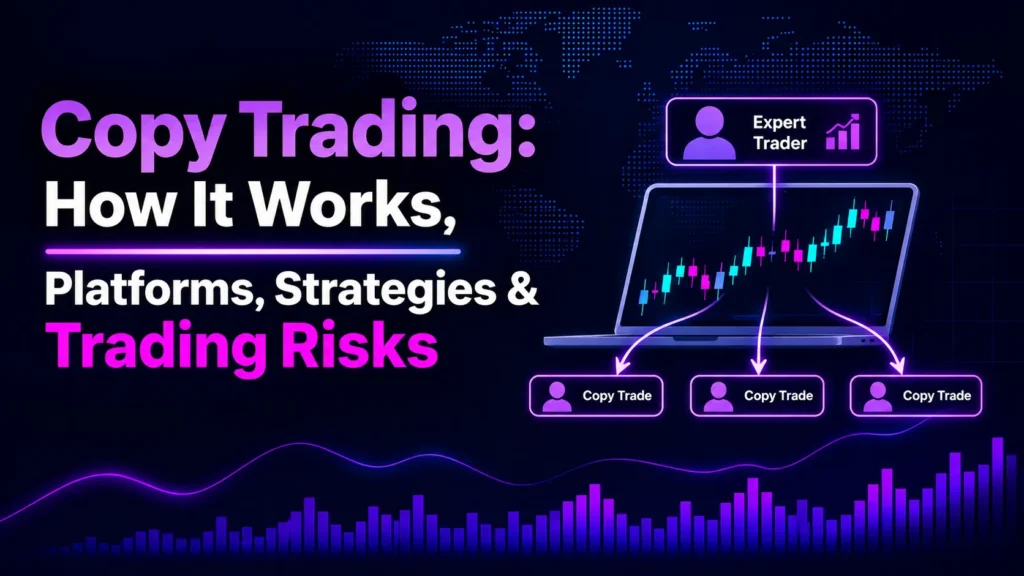
Copy trading lets you follow another trader’s activity by automatically placing similar trades in your own account. When the selected trader opens or closes a position, a connected platform may reproduce that action according to your chosen settings.
This approach appeals to beginners who want market exposure without selecting every trade themselves. However, copying someone else’s decisions does not remove the possibility of losing money.
Understanding the difference between automated copying and forex trading signals is important before choosing either approach.
This article explains how copy trading works, what to check in a platform, and how to manage risks across forex, gold, and cryptocurrency markets.
What Is Copy Trading?
Copy trading is a method of linking your trading account to another trader’s transactions.
You choose a trader to follow, allocate funds, and decide whether to activate automatic copying. The platform then attempts to mirror the selected trader’s positions.
The US Securities and Exchange Commission describes copy trading as a feature offered by certain digital platforms that allows investors to copy other investors’ trades.
Unlike traditional trading, you are not required to place every order manually. However, you remain responsible for understanding the risks.
How Does Copy Trading Work?
The process depends on the broker and platform, but the main stages are similar.
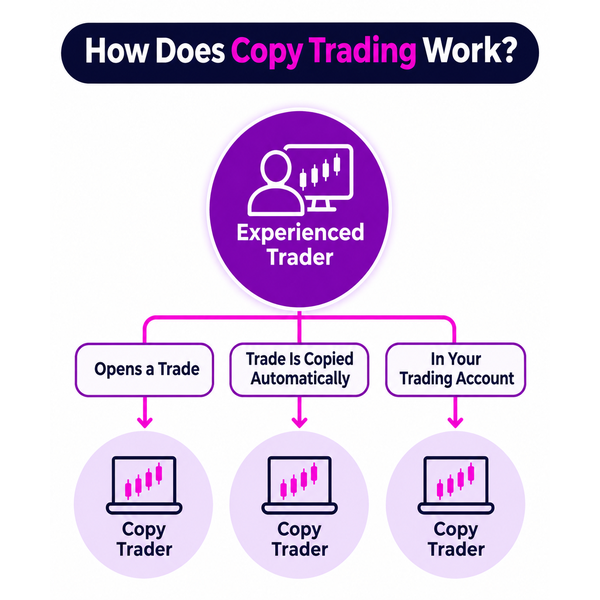
1. Select a Copy Trading Platform
Choose a service that supports your preferred market and account type.
Check its regulatory status, availability in your country, fees, and risk controls.
2. Evaluate a Trader’s Strategy
Review the trader’s available history, trading instruments, drawdowns, and position management.
Drawdown refers to a decline in account value from an earlier peak.
3. Allocate Trading Capital
Decide how much money to assign to the copied strategy.
Some platforms adjust copied positions relative to the allocated balance. Others offer different sizing controls.
4. Activate and Monitor Copying
Once enabled, the platform attempts to reproduce eligible trades.
Execution prices may differ because of spreads, market movement, and order delays.
Automated copy trading still requires regular monitoring.
Best Copy Trading Platforms: What Should You Compare?
There is no single best copy trading platform for every trader.
Instead of relying on promotional rankings, compare features that affect control and transparency.
Regulation and Account Protection
Check whether the platform and relevant service providers are authorised where required.
A recognised brand name does not guarantee that every service is available or regulated in your jurisdiction.
Risk Management Features
Useful controls may include allocation limits, stop-copy options, and maximum-loss settings.
A platform should make it clear how copied positions are sized and what happens when a trader changes strategy.
Trading Costs and Transparency
Review spreads, commissions, overnight charges, subscriptions, and any copying-related fees.
These expenses can affect your results even when the copied trader records a profitable transaction.
The choice of broker also matters, since forex trading spreads and costs vary by account, instrument, and market conditions.
Copy Trading Strategies for Beginners
Copy trading for beginners should start with understanding the underlying method, not selecting a trader based on recent gains.
Trend-Following Strategies
These strategies attempt to participate in sustained market movements.
They may experience repeated losses when prices reverse or move sideways.
Swing Trading Strategies
Swing traders hold positions across broader price movements rather than closing every trade quickly.
This can involve overnight exposure and changing market conditions.
The approach is related to the setups discussed in forex swing trading signals.
Diversifying Copied Strategies
Some traders follow different strategy providers to avoid depending on one approach.
However, copying several traders does not ensure diversification. Their positions may overlap or respond similarly to market events.
Forex Copy Trading vs Crypto Copy Trading
The basic copying process is similar, but market conditions differ.
Forex copy trading involves currency pairs such as EUR/USD or GBP/USD. Trading costs, economic news, and leverage can influence outcomes.
Crypto copy trading involves digital assets, where trading venues, market availability, volatility, and custody arrangements may differ substantially.
Gold can also be copied where a platform supports the instrument.
Traders considering XAUUSD should understand precious metals trading because gold positions can react sharply to economic announcements and changes in market sentiment.
Before copying any strategy, confirm which instruments it trades and how its exposure is calculated.
Benefits and Limitations of Copy Trading
The main attraction of copy trading is convenience.
It can reduce manual order placement and give users exposure to different trading approaches.
However, its limitations are important:
-
- You depend partly on another trader’s decisions.
-
- Historical performance cannot guarantee future returns.
-
- Copied trades may execute at different prices.
-
- Fees can reduce trading results.
-
- Strategy providers may increase risk without warning.
Copy trading works best as a monitored trading arrangement, not a substitute for understanding financial markets.
Copy Trading Risks and Common Mistakes
The biggest mistake is treating a profitable trading history as evidence of future success.
A strategy may have hidden exposure, use excessive leverage, or hold losing positions for long periods.
Other mistakes include allocating too much capital, ignoring trading costs, and copying unfamiliar instruments.
The UK’s Financial Conduct Authority explains the regulatory considerations surrounding copy trading services, including circumstances where automatic trade copying may be classified as investment or portfolio management.
Traders should also understand how leverage affects forex trading, since copied positions can magnify losses.
Monitoring exposure and reviewing account activity remain essential.
Copy Trading vs Forex Signals
Copy trading and trading signals both involve using another trader’s market ideas, but they operate differently.
With copy trading, an authorised connection may automatically reproduce transactions.
With forex signals, users receive information about possible entries, stop losses, and profit targets. They generally decide whether to place the trade themselves.
Traders can compare these approaches using the same principles: transparency, position sizing, and independent risk assessment.
Conclusion
Copy trading offers a way to follow another trader’s positions across supported markets, but convenience should never be mistaken for safety.
Choosing a platform requires careful attention to regulation, trading history, fees, position sizing, and risk controls.
For traders who prefer reviewing trade ideas before placing their own orders, Carl Dupoin’s gold trading signals provide educational context for evaluating XAUUSD setups.
Whether copying trades or following signals, independent judgement and disciplined risk management remain essential.
FAQ's
Copy trading can be accessible to beginners, but it requires an understanding of leverage, platform fees, position sizing, and potential losses.
Yes. Copied trades can lose money, and automatic execution does not protect an account from market volatility or poor trading decisions.
Some platforms automate trade execution, while others require manual confirmation. Users must still manage allocations and monitor their accounts.
Minimum funding requirements depend on the platform, broker, and strategy. Traders should check these conditions and avoid committing money they cannot afford to lose.
Copy trading follows another trader's transactions. A forex robot uses programmed rules to generate and execute trades. Both involve automation but operate differently.
Copy trading follows another trader's transactions. A forex robot uses programmed rules to generate and execute trades. Both involve automation but operate differently.
Copy trading is legal in many countries, but regulations vary by location. Traders should verify whether their chosen platform is authorised by the relevant financial regulator before investing.
Most copy trading platforms allow users to stop copying a trader. However, existing positions may remain open or close automatically, depending on the platform's settings and conditions.
Review the trader's strategy, trading history, drawdowns, risk management, and use of leverage. Avoid choosing someone based only on recent profits or promotional performance claims.
Yes, many platforms support copying multiple traders simultaneously. However, their strategies may overlap, increasing your exposure to the same markets. Monitor your combined risk and capital allocation carefully.